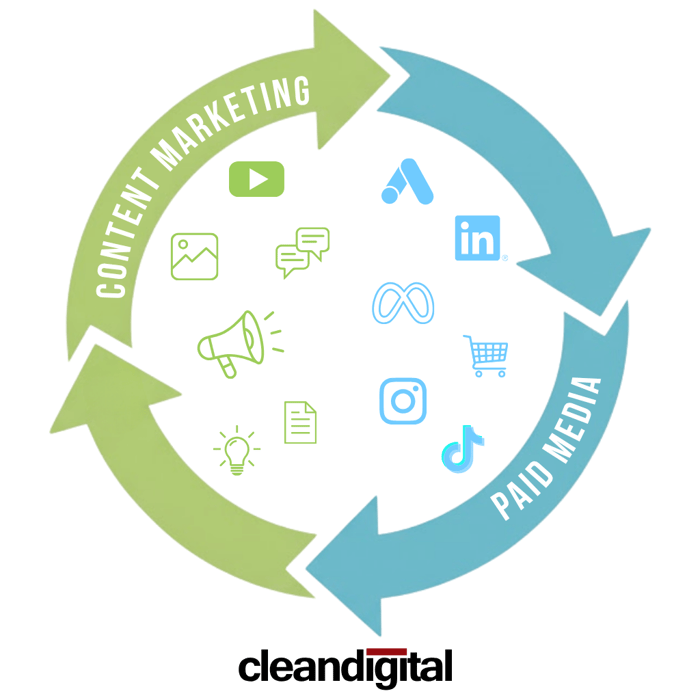
Content marketing and paid media are often treated as separate lanes. On one side: blogs, guides, videos, webinars, and case studies. On the other: Google Ads, Meta campaigns, LinkedIn targeting, and programmatic placements.
The truth? They work best together. When content and paid campaigns are aligned, you get a strategy that not only reaches the right people but nurtures them along the journey, from awareness through to conversion.
At Clean Digital, we have seen this across sectors from higher education to e-commerce, and the results are stronger when content and paid media pull in the same direction.
Using content in paid campaigns
Not every ad needs to scream “Buy Now” or “Apply Today.” Sometimes the smartest move is promoting high-value content that gives people a reason to care.
For university clients, we have promoted guides, student stories, and career-focused videos on LinkedIn and Meta. These top-of-funnel campaigns build awareness while giving prospective students something genuinely useful.
With our e-commerce, educational content like “A Buyer's Guide to…” has been used in paid campaigns to warm up audiences before serving product ads.
For our service clients, content around “Activities to Prepare Your Child for Nursery” has been amplified with paid, positioning them as experts while planting the seed for a future leads.
The key is treating content as campaign assets, not just something sitting passively on the site.
Retargeting engaged audiences
Here’s the thing: just because someone’s read your guide or watched your video doesn’t mean they’re ready to throw money at you immediately. Respect the journey.
Higher Ed: Someone watches a video on “Balancing Study and Work”? Retarget them later with course-specific ads
Ecommerce: A shopper who reads a style guide can later be served dynamic product ads featuring the exact range they were researching
Services: Visitors who view an information based page can be retargeted with ads about booking a visit. Gentle, not desperate.
This works because it respects the buyer journey, you don’t force the hard sell too soon, but you stay present when intent builds.
Measuring content with paid data
One of the best parts of amplifying content with paid is the feedback loop. It’s not just about distribution - it’s free research (well, not free, but cheaper)
Engagement metrics: Which headlines or videos spark the most clicks and views in Meta or Discovery campaigns?
Conversion data: Which guides lead to actual enquiries or sales when paired with retargeting?
Cross-channel learnings: In higher ed, affordability content resonates overseas; career progression pieces land better in the UK. Context is everything
This data does not just make ads sharper, it gives content teams direction for the next piece. Win-win.
Full Funnel alignment
When aligned properly, content and paid media create a really great unified journey:
Awareness: Videos, guides, and stories promoted via LinkedIn, Meta, etc.
Consideration: Retargeting audiences with testimonials, webinars, or comparison content
Conversion: Search and product-led ads pushing that final click
It’s about warming people up gently before going in with the big ask. Because no one likes a brand that comes on too strong.
The takeaway:
Content is not just there to keep Google happy, and paid media is not just about the last-click conversions. Together, they build a more holistic, measurable strategy that feels smarter (and less shouty).
At Clean Digital, we have used this approach to:
Turn university content into actual enrolments
Guide ecommerce shoppers from advice into purchases
Help our service brands turn readers into qualified leads
So if you are running ads without softer, value-led entry points then you are only really playing half the game.. and it’s the small inches that win or lose you the result.
If you'd like to learn more, get in touch!
FAQs
Why should content marketing and paid media work together?
Content marketing and paid media should work together because they complement each other by creating a seamless customer journey. When aligned, they ensure that the right audience is reached at the right time and nurtured through the buying journey, from initial awareness to final conversion. By integrating content into paid strategies, businesses can provide value, build trust, and maintain engagement, which ultimately leads to better results across various sectors like higher education and e-commerce.
How can I use content in my paid campaigns effectively?
To use content effectively in paid campaigns, focus on promoting high-value content that engages your target audience. This could include guides, stories, and educational videos to build awareness and interest. For instance, promoting a “Buyer’s Guide” or student stories across platforms like LinkedIn and Meta can attract potential leads by offering useful information. The key is to treat content as an active asset in campaigns, not just passive material on your site.
What role does retargeting play in a combined content and paid media strategy?
Retargeting is essential in a combined content and paid media strategy because it allows you to reconnect with engaged audiences who may not be ready to convert immediately. By respecting the buyer's journey and retargeting with relevant ads—like course-specific ads after viewing educational content—brands can stay top-of-mind without being overwhelming. This gentle approach nurtures potential customers, increasing the likelihood of conversion over time.
How can amplifying content with paid media improve my brand's strategy?
Amplifying content with paid media improves a brand’s strategy by creating a feedback loop that enhances both content and ad performance. Monitoring engagement metrics, conversion data, and cross-channel learnings provides valuable insights. For example, understanding which guides lead to enquiries or which headlines spark interest can refine future content and campaigns. This approach not only sharpens your ads but also guides your overall content strategy to be more targeted and effective, ensuring a coherent full-funnel alignment from awareness to conversion.