



Listen to this article
What really drives seasonality? Most people think Christmas, payday, or back-to-school. But what if the real trigger is as simple as whether you need sunglasses or an umbrella? Could the weather app on your phone actually be the most underrated PPC tool in your stack?
For years, PPC managers have mastered the “usual suspects” of paid search seasonality: Black Friday splurges, January fitness crazes, summer sales slumps. We know when to push budget and when to pull back.
But there’s a blind spot: the weather. Unlike traditional seasonality, it doesn’t follow neat, predictable cycles. It’s immediate, it’s local, and it can flip campaign performance in hours. A sunny Saturday boosts garden centre footfall; a sudden downpour can send people running indoors, phone in hand, ready to browse and buy online.
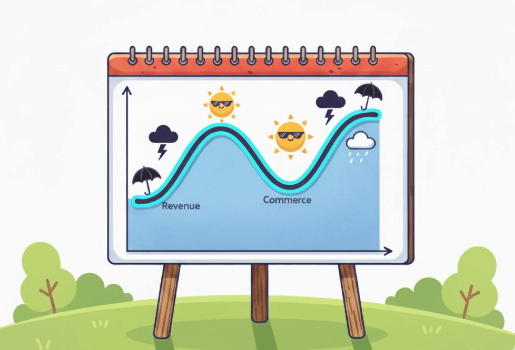
The Rainy Day Revelation
Here’s what we have learned across client accounts: rain isn’t just bad for hair, it’s a major performance driver.
- Indoor-focused businesses? Conversions spike when the skies open.
- Outdoor and experience brands? Sales can fall off a cliff.
We are not talking theory - this is measurable. A rainy Tuesday in Manchester can outperform a sunny one by 40% in some verticals. Weather is not just a nice-to-know factor; it’s often the single biggest lever outside of deadlines and market shifts.
The question isn’t if weather impacts your campaigns. It’s: are you set up to take advantage of it?
Uncovering Weather Patterns in Your Data
- Weather Forecasting Integration
- Plug weather APIs (e.g. Met Office) into your setup. Forecasts become a signal in your bidding strategy, turning your campaigns from reactive to proactive
- Geographic Clustering by Weather
- Forget arbitrary borders. Target “rain zones” and “sunshine clusters” instead. London’s microclimate is not the Highlands, so why treat them the same?
- Script-Based Bidding Automation
- Use scripts that track forecasts and auto-adjust bids. Rain in Leeds? Push budget there. Sunshine in Brighton? Pull back. Your spend literally follows the clouds
- Location-Based Value Rules
- Set bid modifiers tied to forecasted conditions. If your top market’s forecast says “rain all week,” lean in. If it’s sunshine, shift budget elsewhere
Looking Ahead: Predictive Weather Analytics
Weather data goes out seven days. That’s seven days of tactical advantage.
Instead of drip-feeding budget evenly, you can:
Front-load spend before favourable weather.
Ease off during less-promising conditions.
Outpace competitors who only react after weather hits.
It’s not “set and forget.” It’s “set and forecast.”
Key Takeaway:
Weather doesn't just influence what people wear; it fundamentally shapes how, when, and where they buy. From students choosing revision over recreation based on rainfall, to consumers shopping online during downpours rather than visiting physical stores, weather drives immediate behavioural shifts that traditional seasonality models completely miss.
Paid search campaigns that ignore meteorological data are essentially flying blind in a storm. The brands winning in this space aren't just tracking clicks and conversions; they're looking at the percentage chance of rain, planning for a heatwave or, for whether April showers are guaranteed.
The future of paid search seasonality isn't found in last year's performance data; it's in tomorrow's weather forecast. Start treating your local meteorologist as seriously as your analytics dashboard, because in the world of weather-responsive marketing, they might just be your most valuable team member.
If you'd like to learn more, get in touch!
Frequently asked questions
How can weather data improve PPC campaign performance?
Weather data can dramatically enhance PPC campaign performance by enabling real-time adjustments. By integrating weather forecasting into your bidding strategy, you can predict consumer behaviour shifts and tailor your campaigns accordingly. For instance, increasing bids for indoor-focused businesses during rainy periods can capture higher conversion rates, while outdoor activities might require budget reductions.
What tools are available to incorporate weather data into PPC strategies?
To incorporate weather data into PPC strategies, consider using weather APIs like those from the Met Office. These can be integrated to provide continuous forecasting updates. Additionally, script-based bidding automation can adjust bids automatically based on local weather conditions, ensuring your campaigns are always optimised for current and predicted weather patterns.
Why is weather a more dynamic factor than traditional seasonality in PPC?
Weather is more dynamic than traditional seasonality because it doesn't adhere to predictable cycles. While events like Black Friday or back-to-school shopping happen at set times, weather changes are immediate and localised. A sudden weather shift can quickly influence consumer behaviour, making it crucial for PPC managers to react swiftly to leverage these opportunities.
How does weather impact different business sectors in PPC campaigns?
Weather impacts different business sectors uniquely. For indoor-focused businesses, rainy weather can lead to increased online transactions as people stay indoors and browse more. Conversely, outdoor or experiential brands might see a decline in sales during adverse weather. Understanding these patterns helps tailor PPC strategies to maximise effectiveness based on current and forecasted weather conditions.
Share this article
Related articles
 Content-Specific Paid Media Strategy: Making Content Work HarderThe truth? They work best together. When content and paid campaigns are aligned, you get a strategy that not only reaches the right people but nurtures
 Digital Marketing for Hotels: Our Blueprint For SuccessAt Clean Digital, we've helped numerous 4 & 5 star hotel brands unlock their full potential through meticulously crafted paid media campaigns.
 Generative Search Optimisation: How to Optimise for AI SearchSearch is changing - fast. Google, ChatGPT, Gemini, Claude… they are no longer just giving you a list of links. They answer your questions for you.