


Table of Contents
- 2025 Digital Marketing in Review: The year of the dead
- AI Search: “SEO is dead” 2025 version
- AI ads: Monetisation-as-a-Challenge
- The year PMax finally opened the curtains
- Demand Gen found its identity
- Video and rich media took over
- The Rise of Attribution - Episode II
- TikTok achieved maturity
- Amazon’s Ad Tech Bet
- CTV and DOOH
- The cookie killer’s death
- Aitordamus: What for 2026?
- FAQs
2025 Digital Marketing in Review: The year of the dead
This has been an unbelievable year for the digital marketing landscape. I am sure that most people will underline that 2025 has been mostly shaped by the rapid progress on AI models and workflow exploration. I would agree on that, but I would also add some nuance: it has been a year dominated by uncertainty and misconceptions on how these new technologies would shape the world. It has felt “rushed”. A “race” if you’d like.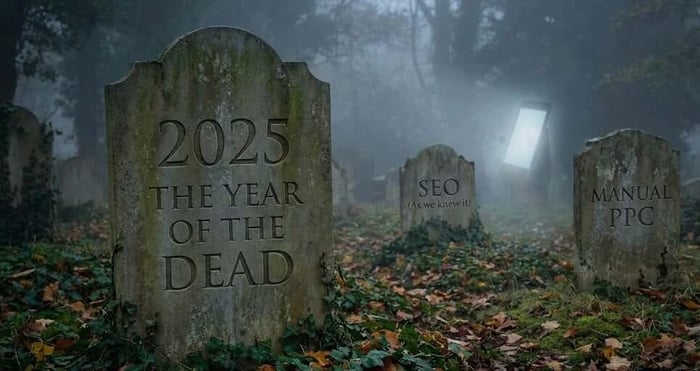
We joke at the office that this has been “the year of the dead”. According to some, at different stages of the year:
- Google “was dead” because how “behind” they were on consumer-facing LLM.
SEO itself has been killed once again, GEO is arguably the future according to some.
Wait! But now there is a discourse that SEO and GEO are virtually the same? Or not?
It is not dead, as everything, it’s changing.
Google Ads was considered dead too…because of some theories claiming ChatGPT would become the favourite search engine worldwide.
Not quite. It looks like Gemini is now increasing market share again based on estimates. Google is reporting record revenue for Search. Old habits die hard and Google has been catching up with good integrations.
2025 has not been that tragic, things rarely are. However, it is unquestionable that they have been transformative and will continue shaping the internet and consumer behaviour, and digital marketing, in the coming years.
In this blog post, I will try to highlight the biggest changes that have happened during 2025. I will also try to offer a perspective on how I understand these changes. As a heads up, I’m inclined into using a very direct language and I’m aware that capturing nuances may not be possible in this case.
Having said that, it will be interesting to read other perspectives. The truth always lies in the middle.
AI Search: “SEO is dead” 2025 version
2025 has seen the AI Overviews by Google fully rolled out (release was in 2024), as well as the AI Mode. ChatGPT offers grounding so users can use it as if it were a search engine, they use organic rankings to find results. We have already seen a decrease in SEO traffic across the market, and it’s only normal to assume that “0-click” searches will increase more, which will result in further SEO traffic decline.
In this sense, Google claims that organic traffic volume will decrease but the quality of this traffic will increase. It’s a valid argument but we will see how this translates into the real world. I feel this will vary hugely from vertical to vertical.
In 2026, we will have to wait and see how users continue engaging with Google and LLMs. After all, it is not the same people looking for “compatible PC components” as having an “AI friend”. It is not the same making ChatGPT their go-to platform than it is to continue using Google. This is because we have seen above that ranking factors are slightly different for those platforms so marketers might need to focus on different aspects.
In any case, every marketer and business should be ready to be competitive in this landscape independent of which platform gets the biggest adoption. How we use the internet is changing and it will deepen the change in our behaviour during 2026. Nail the basics!
On top of on-site content (easy to read texts, use of tables, answering questions, etc.), off-site content seems to be incredibly important for the AI to deem you “trustworthy”; user generated content, coverage in news outlets, etc. should not be disregarded as we enter 2026. Keep a close eye, the scope is getting much wider and there is a lot of noise.
AI ads: Monetisation-as-a-Challenge
If there was one theme that defined 2025, it was this one: AI is here to stay and Google wants advertisers to be ready for it. Between the AI Max trials, broad match/keywordless centric strategies and new auto-experiments, Google made it very clear what direction the ecosystem is heading in and ads will play a part in it.
The truth is that there is an “AI War” out there with OpenAI, Google, Antropic trying to gain market share. They are not monetising it for now apart from subscriptions. At some point, they might need to find monetization methods and, let’s face it, it’s very likely it will be through ads.
Hot take alert. In my view, Google is the best positioned company to deliver good ad-tech technology. At the end of the day, it’s Google and not OpenAI that has decades of experience on ad delivery and data points. It’s also yet to be seen how ad placements can look within AI: they cannot look too intrusive, or too smart. People don’t like to feel under surveillance, it can feel “creepy” because of the personal nature of the chatbots - remember the “AI Friend” example above. This affects usage and platform adoption.
Introducing ads first can create a lot of friction even executing it perfectly. Are users ready for enshittification after getting used to quite clean results? How deep are those pockets to bleed cash? Will Google be the first one to introduce ads “en masse” or will they continue testing it throughout 2026 for when the extra revenue boost is needed and keep increasing market share in the meantime with attractive quotas?
The year PMax finally opened the curtains
Google’s launches are not great. tROAS was not great for search when it launched, I remember labeling it as “a bit abusive" at the time because CPCs would go crazy at inconsistent rates. Fast forward, Smart Shopping was not great either when it was launched, until it became probably the best shopping campaign type I have ever run.
It was not different for PMAX. During 2025, for the first time since it launched in 2021, PMax started to feel a little less like a black box and a little more like a tool that advertisers trust. Google understood that they had to tweak their star product to push for more adoption and give some data away to gain that trust. We got better placement insights, clearer reporting, and a sense of what is really driving performance under the hood. That alone really changed how people approached optimisation and suddenly, creative decisions mattered more, test structures made sense again, and we could actually talk about strategy without shrugging. On top of this, I believe that the PMAX algorithm has been improved as it happens with every algorithm Google launches (looking at you, broad match!).
Going into 2026, I see PMAX making progress for leadgen businesses, who arguably have struggled the most with the black box. The transparency with search terms and negative keywords, as well as placements and improved bidding algorithm could now reduce the friction to experiment.
On the risky side, we will have to see how PMAX and Google’s other bet, AI MAX, coexist within an account. I feel there is some overlapping that Google will need to address.
Demand Gen found its identity
Google spent most of the year reshaping Demand Gen into something much more purposeful. We had GDN (Google Display Network) campaigns that fell off, “Discovery” campaigns with an unclear value proposition, endless changes to YouTube Campaigns. Google reworked it all in 2025, and it has some merit.
It stopped feeling like “Discovery 2.0” and started acting like a proper mid-funnel player, one that competes with TikTok and Meta rather than sitting awkwardly in the background. With YouTube, Display, Discovery and Gmail working together more intelligently. Demand Gen finally feels like a place where brands can catch attention and move people toward intent. The value proposition is clear now and it simplifies the understanding of the placement gap it tries to fill.
I would expect even more momentum behind this campaign type next year. I’m expecting new audience features that will boost this campaign type even further. Get your creative teams ready, though, as there are lots of different placements to cover!
Video and rich media took over
Video has been creeping back into the spotlight for years, but 2025 was the year it really took over. Meta pushed harder into Reels and performance-led video (almost bullishly), TikTok expanded search and ad formats, and Google kept feeding YouTube more algorithmic power.
Movement, storytelling and dynamic assets were the game-changers this year, and they are only going to matter more. During Google’s Marketing event, they also showed video assets showing on the SERP.
Google knows this. They’ve leveraged multiple tools inside Google Ads and Merchant Centre to onboard people quickly. The same applies to Meta.
Finally, it’s no secret that users research around the web using social media and AI. To gain presence in those platforms, branding, user engagement and user generated content might become the best asset a marketer can have.
The Rise of Attribution - Episode II
Attribution was a big thing 10 years ago. Everyone was trying to figure out what channels were bringing most of the value. Google made big advancements on attribution paths that tried to uncover where the hidden value of the ad spending was. Obviously, META did the same thing since social channels are probably the hardest channels to attribute. It was a funny situation, Google had a conflict of interest because search last click was probably over-represented in this model. They dominated search traffic as well as the Analytics segment of the market so alternative models might incline advertisers to put advertising dollars in a different platform. In the middle of everything, marketers were trying to get answers from black boxes while Apple’s ATT was hurting too.
The thing is that attribution has been mostly unsolved…and Google surprised us in January 2025. Google open sourced “Meridian”, their MMM (Marketing Mix Model). Google tried to regain the narrative and offer marketers a new take for the same problem. Create a good model based on your data (plus some proprietary data from Google like the search query volume) and trust the model. I’m betting we will see some iterations in 2026 for Meridian and large advertisers will try to discover if there is a way to optimise budgets across-channels.
TikTok achieved maturity
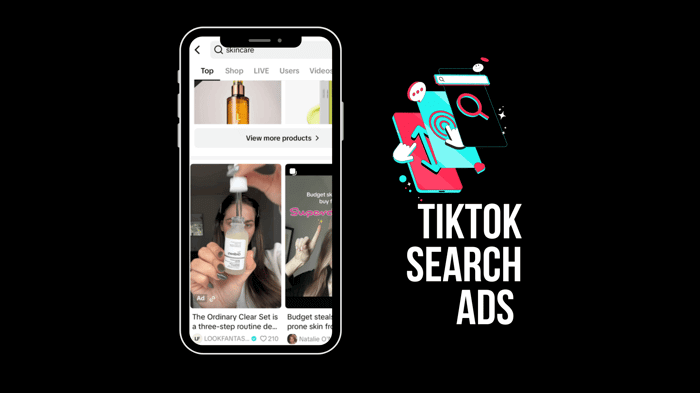
TikTok had its “grown-up” moment in 2025 and stopped behaving like a discovery led, scroll only platform and started acting like a search engine in its own right.
Over half of its users now actively use TikToks search functionality (57%), and behaviour on the platform reflects this shift. Users open the app around 19 times per day on average, with 90% accessing TikTok daily, and almost a quarter searching for something within 30secs of opening the app. This is not just passive consumption… its intent-led behaviour.
What's changed is how people use TikTok? Search is now more informative, and users are actively seeking advice and recommendations. As a result, evergreen topics are increasingly outperforming short-lived trends and its giving both organic and paid content longer shelf life.
This shift is why TikTok has earned its place in the performance marketing conversation.
Looking ahead to 2026, measurement remains the main challenge. While ownership dynamics in the USA are worth monitoring, we don't expect material disruption. What's unlikely to change is TikTok's algorithm, still its biggest advantage point for user retention and matching content to intent at speed.
Amazon’s Ad Tech Bet
This was not in my bingo card for 2025, but it happened quite early in the year. Amazon decided that it could be a good bet to make their ad delivery system available for third parties. The idea is quite different from what we are used to; Amazon would offer their ad inventory and sites could implement an ad-delivery system to show those ads on their sites.
Adoption is unclear at the moment. The idea is quite interesting as it offers retailers another way to monetise their sites. Imagine striking deals with specific brands to boost sales of their products on your site with decent matching - key for good conversion rates. Everything with minor headaches when it comes to implementation or maintenance.
On the other hand, there are privacy concerns as Amazon could in theory harvest data on how these third party sites work.
I have the feeling that Amazon will keep exploring this channel but it is not intended for mass-adoption, it’s not a solution for everyone.
CTV and DOOH
Connected TV (CTV) and Digital-Out-Of-Home (DOOH) had strong momentum in 2025, but they still feel a step away from true performance maturity. People want to invest more; they just need clearer measurements and more integrated reporting.
If platforms can close that gap, these channels could finally move from “nice to test” to “core part of the mix” next year.
The cookie killer’s death
RIP. Goodbye Privacy Sandbox.
Google tried to pull off one of the most aggressive movements of the decade by trying to remove third-party cookies. It faced serious backlash from DSPs and the majority of the industry.
Google might have a point that 3rd party cookies are not very privacy-friendly, but Google’s solution would give themselves too much power. Google will be controlling the browser, playing the game and controlling it. Google would also leverage strong first party cookies due to sign-in data through Chrome while other players would be stripped from a lot of data overnight.
Some would argue that the cure to the disease would have been worse than the disease. In another (related) matter, Google was cleared from an antitrust lawsuit in the US in 2025, but it’s still clearly flying very close to the sun and under lots of scrutiny.
Aitordamus: What for 2026?
If 2025 was about laying down the rails, 2026 is about seeing how fast the train can go.
Before everything, it’s very important to have in mind at all times that adoption is not as quick as marketers picture it. Radical predictions looking to boost Linkedin engagement mostly don’t hold it.
Adoption happens over years, surely not one year. Humans are creatures of habit and AI as it stands today, is not totally understood yet.
Regardless of that, AI providers will try to accelerate AI adoption through 2026, they can’t just sit still even if it presents some challenges and they bleed cash. The piece of the pie is just too big. They will introduce new features and use cases. Monetization will introduce new friction points. Some will be welcomed by users, some others outright rejected. It will be our job as marketers to understand these changes and be strategic on the bets we make. Don’t take anything for granted and be open-minded, things are changing quickly as 2025 has shown.
From a workflow perspective, this report by McKinsey agrees that AI is in the early stages of adoption. AI-led workflow experimentation will become normal with many pilots on the way; from designing creatives to execute campaigns. Manual jobs are being automated with AI already, and digital marketing will be no different.
META has announced fully automated campaigns by 2026. They might pull it off. It could be good for SMBs who have little or no time to pay attention to ads. Probably improvable, but it shows that the barrier of entry for ads is getting lower and lower. That will also increase competition within the platform.
CPC inflation is a thing and the AI might exacerbate it. If fewer people are clicking on search results, then we might expect higher bids to capture those users that are very interested in the products or services we have to offer. In a response to this, the SERP has also leaned towards more ad space to keep ads traffic up. Paid ads might be seen by some as a patch to cover SEO traffic downfall, increasing costs and competition. SMBs will suffer in this landscape and good strategy might become more important than ever; not across paid only, but business strategy.
We are already seeing leaner digital marketing teams. We won’t need “human-robots” doing tedious jobs; instead, we will need technically more capable people with keen eye for detail. And above everything: people who are great at understanding the business they are serving. After all, who remembers manual bidding and SKAGs? Have we thought about how to troubleshoot a PMAX campaign?
It will be important to understand the digital marketing landscape and tackle the new needs that users will need satisfied. The scope of performance marketers widens and AI will be essential to cover it. Identifying areas with the biggest impact for our businesses will pay off.
If you’d like to learn more, get in touch, and please follow us for more digital marketing related content!
Frequently asked questions
Is SEO actually "dead" now that AI search and ChatGPT are mainstream?
Not at all - it has simply evolved. While "0-click" searches (where users get answers directly from an AI overview) are increasing, the focus for 2026 must shift towards brand authority. To remain competitive, businesses need to prioritise "grounding" their data. This means doubling down on on-site basics like structured tables and clear headings, while simultaneously building off-site trust through news coverage and user-generated content (UGC) so that AI models recognise your brand as a reliable source.
Should I still be wary of the "black box" nature of Performance Max (PMax)?
The "black box" is starting to open. 2025 was a turning point where Google finally provided the transparency advertisers have been asking for, including better placement insights and search term reporting. While PMax still relies heavily on automation, we now have the data to make informed creative and strategic decisions rather than just letting the algorithm run unchecked. For 2026, it is becoming a much more viable tool for lead-generation businesses, provided it is managed with a keen eye for detail.
With TikTok becoming a search engine, should I move my Google Search budget there?
It’s not about replacing one with the other, but rather understanding the different types of user intent. TikTok has matured into a platform where 57% of users are actively searching for advice and recommendations, making it a powerful mid-funnel player. However, Google still dominates high-intent, immediate-action searches. The best strategy for 2026 is a diversified approach: use TikTok for evergreen, informative content that captures attention, and Google to capture the final conversion.
Share this article
Related articles
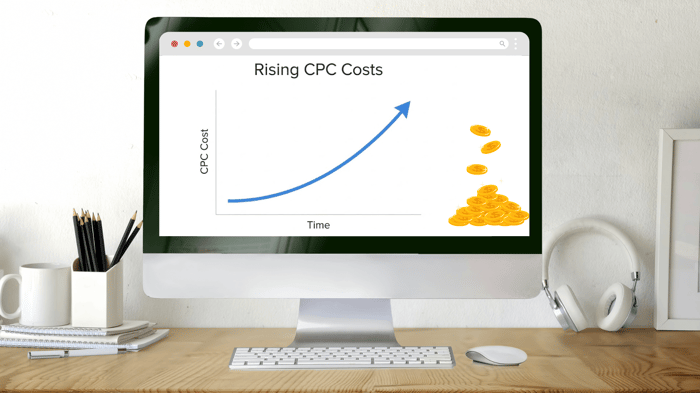 The Rising Costs of Digital AdvertisingThe trend of rising costs of digital advertising, marked by rising CPCs (Cost Per Click) and CPMs (Cost Per Mille, or Cost Per Thousand Impressions), is
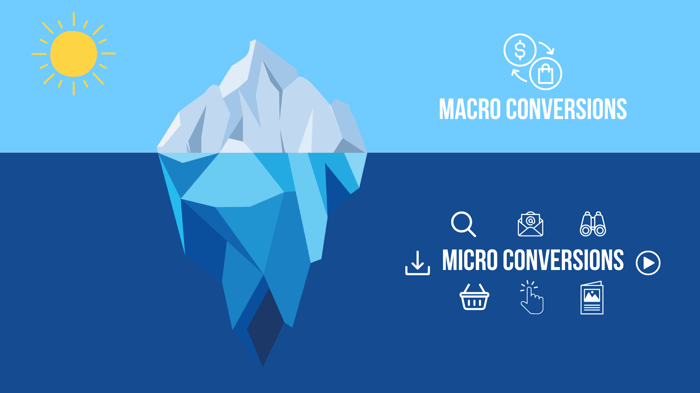 Are micro conversions the most underused advantage in PPC??Realistically? That’s not how people behave anymore. They take their time. They explore. They do a handful of small actions before ever filling out a form or
 Meta’s Ads Library just got more useful (and here’s why it matters for 2026)Firstly, you can now filter Ads Library results by WhatsApp. That’s a big deal. WhatsApp has always been there in Meta’s ecosystem, but until now