


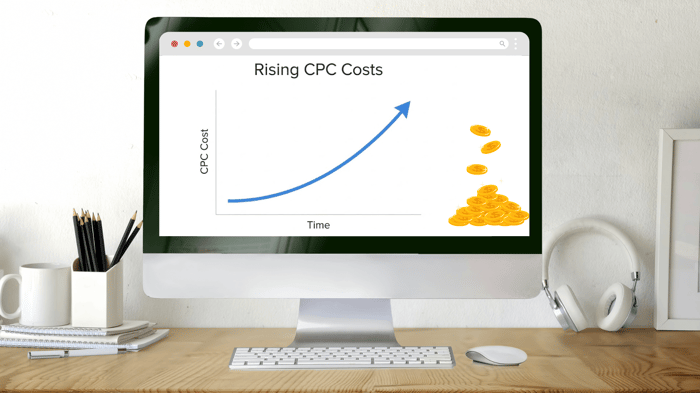
The rising costs of digital advertising is no secret. Advertisers, from small businesses to global corporations, are feeling the pinch as the cost of reaching potential customers climbs higher.
The trend of rising costs of digital advertising, marked by rising CPCs (Cost Per Click) and CPMs (Cost Per Mille, or Cost Per Thousand Impressions), is fundamentally changing the economics of media spend and forcing everyone to rethink their strategies.
Riding the Wave of Rising Costs of Digital Advertising
The escalating prices for digital ads aren't a coincidence; they're the result of a perfect storm of interconnected factors. The first and most obvious culprit is increased competition. When the COVID-19 pandemic accelerated the shift to online commerce by years, it also brought a flood of new advertisers into the digital space. More brands vying for the same limited ad inventory on platforms like Google and Meta naturally drives up prices in an auction-based system. It's simple supply and demand: more bidders for a fixed number of ad slots means higher costs.
Another significant factor is economic inflation. Just as the price of groceries and petrol has risen, so have the operational costs for businesses, including their advertising budgets. Many companies are spending more just to maintain the same level of visibility they had before. This inflationary pressure is evident across the board, from search ads to programmatic display and social media.
Beyond market forces, platform changes are also playing a role. Google, for instance, has introduced richer search features and generative AI results. While these features are designed to improve the user experience, they can also reduce the number of clicks on traditional ads, as users get their answers directly from the search results. Fewer clicks for advertisers mean intensified competition for the remaining clicks, which, in turn, pushes CPCs even higher. Similarly, the rise of automated bidding systems like Google's Performance Max, while effective for some, often bids higher to maximise conversions, contributing to the overall cost increase.
The Impact on Buying Power 💸
For advertisers, the real consequence of rising CPCs and CPMs is a decrease in the buying power of media spend. In plain terms, your budget simply doesn't go as far as it used to.
Fewer Clicks, Same Budget: If the average CPC for your industry jumps from £2 to £3, a £1,000 budget will now only get you about 333 clicks instead of 500. This directly impacts the amount of traffic you can drive to your website or landing pages.
Reduced Reach and Awareness: For brand-building campaigns focused on impressions, a higher CPM means you can show your ad to fewer people. A CPM increase from £8 to £10 means your £1,000 budget will get you 100,000 impressions instead of 125,000, limiting your brand's reach.
This erosion of buying power forces marketers to make tough choices. It's no longer just about increasing ad spend; it's about being more strategic than ever. Businesses that used to rely on broad, top-of-funnel campaigns are now re-evaluating their strategies to focus on more efficient channels and tactics. The emphasis has shifted from simply acquiring clicks to acquiring high-quality, high-value customers.
How To Track Changes In Base Costs
Whilst those base cost increases are unavoidable, but should be closely monitored as they directly impact future buying power as detailed above. To at the very least maintain buying power amidst the rising costs of digital advertising, it is recommended that brands increase channel spending by the percentage changes in base costs.
Google themselves don’t tend to publish numbers on annual CPC changes but there are often articles every few months on the likes of Search Engine Land (Search Engine Land - News, Search Engine Optimization (SEO), Pay-Per-Click (PPC)), such as (CPC inflation: How fast are Google Ads costs rising?) which can provide great context on how much those CPCs are changing year-on-year. The average rate for the last couple of years is around 10%.
Meta provides much more insight on costs, which fall under their ‘Average Price Per Ad YoY Percentage Change’ (Earnings Presentation - Q2 2025) tab in their quarterly presentations. That mark was a 17% increase y/y for Q2 2025.
It is important to note that a lot of the available data is all based around averages and it’s important to keep track of how your own CPC/CPMs are increasing between periods. These changes also don’t factor in changes in strategy, which may see different or adjusted targeting options selected as part of campaigns.
Adapting to a Costly Landscape
Surviving and thriving in this new environment requires a more sophisticated approach. Instead of panicking, smart advertisers are getting back to basics and looking for new ways to optimise their campaigns.
1. Focus on Quality Score and Ad Relevance: Platforms like Google Ads reward relevant, high-quality ads with lower CPCs. By improving ad copy, using more specific keywords, and ensuring a great landing page experience, you can increase your Quality Score and effectively reduce your cost per click.
2. Rethink Bidding Strategies: Automated bidding can be a double-edged sword. While it can be very effective, it's not a set-it-and-forget-it solution. Advertisers are increasingly using a mix of manual and automated bidding to maintain greater control over their costs while still leveraging platform intelligence.
3. Explore New Channels: When a platform gets too expensive, it's time to explore alternatives. TikTok, Pinterest, and even podcast advertising may offer lower CPMs and CPCs, providing a less competitive environment to reach new audiences.
4. Prioritise Lifetime Value (LTV): As customer acquisition costs (CAC) rise, the importance of customer retention and lifetime value becomes paramount. It's better to pay a higher CPC for a customer who will make multiple purchases over time than to acquire a cheap click from a one-time buyer.
The takeaway is clear: the era of cheap and easy digital advertising is over. With the rising costs of digital advertising, the current climate is forcing marketers to be smarter, more creative, and more data-driven. The companies that will win aren't necessarily the ones with the biggest budgets, but the ones with the most strategic approach.
If you’d like to learn more, get in touch.
Frequently asked questions
What is a "good" CPC or CPM?
There is no single "good" number, as costs vary widely by industry, platform, and geography. For example, the legal or finance industries will have a much higher average CPC than e-commerce or retail. A more useful question is: what is the CPC or CPM that allows me to hit my business goals and maintain a positive ROI?
Why do some industries have much higher CPCs than others?
Higher CPCs are usually found in industries with a high customer lifetime value (LTV). For example, a law firm can afford to pay a high CPC because a single new client could be worth thousands of pounds. Similarly, the competition for high-value keywords in the B2B software space drives up costs significantly. Given that paid search works on an auction basis, the market will always decide the top price in those auctions. Those advertisers who can analyse their data better than others or incorporate CLTV into how they bid for new customers will inevitably be able to bid higher than others, so make sure you’re analysing your own data properly.
Is this trend of rising costs going to continue?
Experts predict that the trend of increasing digital ad costs will continue, albeit at a fluctuating pace. Factors like competition and inflation aren't going away. However, platforms will continue to evolve, and new ad channels will emerge, offering new opportunities for advertisers to find efficiency. The key is to stay informed and be agile.
Share this article
Related articles
 2025 in Review & The Digital Marketing Shifts Shaping 2026This has been an unbelievable year for the digital marketing landscape. I am sure that most people will underline that 2025 has been mostly shaped by the
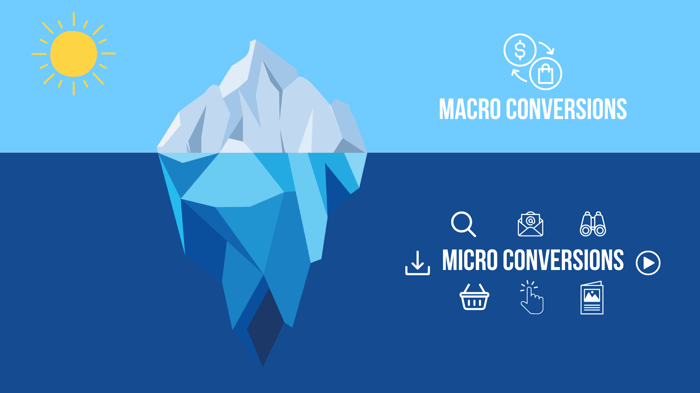 Are micro conversions the most underused advantage in PPC??Realistically? That’s not how people behave anymore. They take their time. They explore. They do a handful of small actions before ever filling out a form or
 Using Google Trends for UK Consumer Sentiment AnalysisFor marketers and advertisers, keeping a finger on the pulse of this sentiment is essential for crafting effective campaigns. While traditional methods