



Selecting a new location has become something of an industry.
Starbucks built an entire internal geospatial division to determine where their next cup should be served, layering foot traffic data, drive-time modelling, and daytime population flows.
There are academic papers on this. Dedicated software platforms. Consultants who do nothing else.
Sometimes, though, the answer is much simpler than the process built around finding it.
We worked with 1Rebel, one of London's best boutique fitness brands, on exactly this question. As part of wider customer analysis - looking at how attendance and sales varied by location, seasonality, weather, and demographics - we mapped 1Rebel's London customer base by postcode.
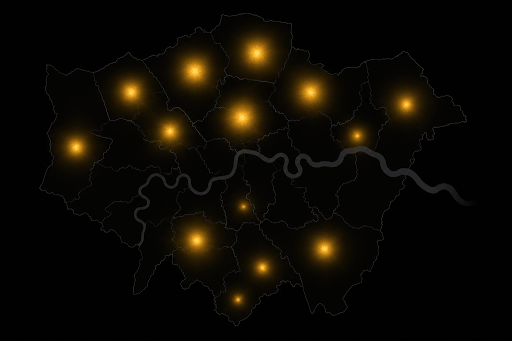 Illustrative heatmap – not client data
What came back was striking: meaningful demand in the south, no club to serve it – a gap that, once you could see it, was hard to unsee.
1Rebel opened in Clapham. It's their most successful opening to date.
Your customers may already be voting with their postcodes. They are showing you where they live, how far they travel, and where demand may be going unmet. The opportunity is often already in the data – it just needs to be surfaced.
If you’re ready to understand what your customer data is already telling you, we'd love to talk.
And if you haven't tried 1Rebel yet, you really should.

A final thought...
- Map where your customers live and travel from
- Identify geographic gaps between demand and provision
- Turn customer data into actionable location insight
If you’d like to learn more, get in touch today. Don't forget to follow us for more digital marketing insights and subscribe to our newsletter!
Frequently asked questions
How can I use customer data to choose a new business location?
You can use location intelligence to map the postcodes of your existing customer base. By identifying high-demand areas where you currently have no physical presence, you can pinpoint the exact locations that will most likely mirror the success of your existing sites.
Does location intelligence require expensive software?
While dedicated software exists, the core principle is about surfacing existing data. By analysing your own attendance, sales, and customer demographics, you can often identify clear geographic opportunities without needing a massive enterprise-level geospatial department.
Share this article
Related articles
 The PPC World Cup: Navigating Strategy During the TournamentBut while millions of eyes are glued to the world cup pitches, what is happening behind the scenes to your paid media accounts? Major sporting events can
 Why Marketing Must Move from Seasonal to Signal LedIn 2026, demand doesn’t follow fixed timelines; it is shaped in real time by weather, trends, economic shifts, and online behavior. To capture
 Why Creative Matters in Paid MediaIn paid media, data and spend often get all the attention, but the role of creative is often overlooked. Without strong, engaging ads, even the biggest