


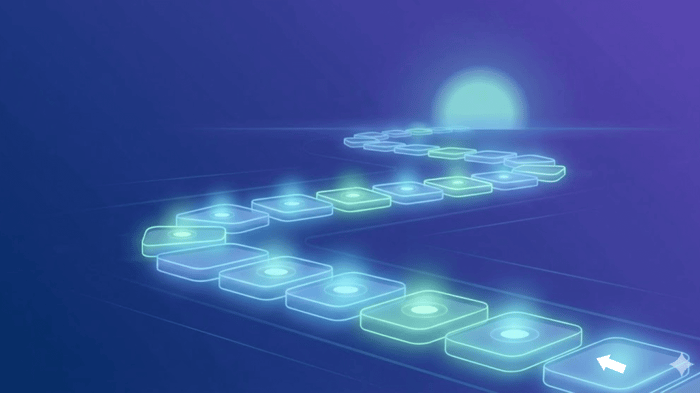
The gravitational pull of long-term aspiration is weakening as consumers increasingly seek instant relevance in their brand interactions. As we move into 2026, brands that continue to anchor their propositions in distant rewards, future payoffs or ‘one day’ outcomes will feel progressively out of step with consumer reality.
We are operating in an era of sustained uncertainty rather than short-term disruption. Economic volatility, geopolitical instability, climate anxiety, housing inaccessibility and rapid technological change have combined to create a often discerning background hum of unease. Consumers are not simply distracted but evermore driven towards emotionally fatigue. As a result, many are subconsciously recalibrating how they define value and reward.
Moments of escape
Rather than planning years ahead, people are prioritising what improves their sense of wellbeing now! This isn’t a rejection of ambition or responsibility, more that it’s a pragmatic response to a world where traditional life milestones feel increasingly fragile or unattainable.
For younger generations particularly, the promise of a distant payoff - owning a home, retiring comfortably, long-term brand ‘status’ - often feels abstract compared to the certainty of a meaningful experience in the present. A weekend away, a cultural event, a small luxury or a moment of escapism offers something tangible: joy, control and instant emotional return.

From a strategic perspective, this marks a fundamental shift in how brands should think about motivation. The old loyalty playbook assumed patience: accumulate points, stay committed and eventually receive a significant reward. That model is losing effectiveness because it relies on trust in the future. Increasingly, consumers want evidence of instant relevance - proof that their engagement is worthwhile immediately, not just eventually.
Surprise and delight
Dobbies’ Club and Club Plus programme offers a great example. Rather than relying solely on distant rewards or complex point accumulation, Dobbies provides members with immediate, tangible benefits that deliver value from the moment they join. With 10%-off plants, bulbs and seeds, two free hot drinks each month, exclusive offers and priority access to events, members experience real feel-good rewards that strengthen the brand connection every time they shop or visit.
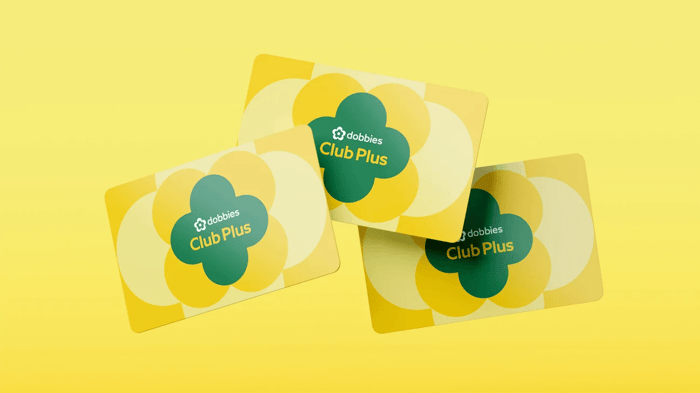
These perks, paired with straightforward points-earning that converts into money-off vouchers, mean everyday gardening purchases become a series of small appreciable wins rather than a slow march toward a distant payoff. Crucially, this doesn’t dilute Dobbies’ value proposition; it enhances it by providing instant relevance - signalling that the brand recognises and rewards ongoing engagement consistently and in the here and now.
Looking ahead to 2026, this principle will extend far beyond loyalty schemes. Instead of selling only the ultimate outcome - transformation, mastery, prestige or savings - brands must learn to spotlight and reward the full journey a customer takes with their brand. Progress needs to be visible, measurable and emotionally resonant at every stage, that’s what creates sustained long-term loyalty.
In practical terms, this means redesigning customer journeys to include more moments of acknowledgement and gratification. Subscription brands might surface weekly ‘wins’ rather than annual savings. Financial services could reframe saving not as sacrifice, but as a series of positive behaviours that unlock immediate benefits or reassurance. Retailers and travel brands can create layered experiences where engagement itself becomes rewarding, not just the final transaction.
Progress beats promises
Technology will accelerate this shift, with more sophisticated CRMs, real-time personalisation and AI-driven insight. Brands in 2026 will be able to respond dynamically to customer behaviour and emotional context.
The opportunity, and indeed challenge, will be using this capability to deliver instant relevance and genuine value rather than superficial gamification. Consumers are highly attuned to inauthentic reward mechanics and so progress must feel meaningful, not manufactured.
Ultimately, the brands that win in 2026 will be those that understand a simple truth: progress beats promises.
By breaking down long-term goals into achievable, confidence-building moments, brands can help consumers:
Feel grounded and valued: Providing stability through consistent, small wins.
Maintain optimism: Focusing on immediate progress rather than distant rewards.
Build authentic trust: Moving beyond engagement to create a lasting bond in a skeptical market.
If you’d like to learn more, get in touch, and please follow us for more digital marketing related content!
Frequently asked questions
What is the primary difference between "deferred value" and "instant relevance"?
Deferred value relies on a "pay-off" that happens in the future, such as traditional loyalty points or "buy ten, get one free" schemes. Instant relevance focuses on the now. It ensures that every single interaction provides immediate utility or emotional validation, making the customer feel the brand’s value in real-time rather than making them wait for a milestone.
How can brands avoid the "superficial gamification" trap?
The key is to prioritize utility over novelty. While badges and progress bars can be fun, they feel "manufactured" if they don't help the user achieve their actual goals. To remain authentic, brands should ensure that "progress" correlates with a tangible benefit—like a simplified user interface, a time-saving insight, or a personalized recommendation that solves a current problem.
Why is trust becoming harder to earn in 2026?
As AI-driven marketing becomes the standard, consumers are increasingly wary of being "managed" by algorithms. They can sense when a brand is using data to manipulate them versus using it to support them. By focusing on consistent, small-scale progress, brands prove their reliability over time, which is the only way to build genuine trust in a high-tech, high-skepticism environment.
Share this article
Related articles
 AI Advertising Pivot: Navigating the Shift from Search to Discovery in 2026While platforms like OpenAI initially signalled resistance to a traditional advertising model, many paid media specialists suspected that scale, cost and
 Meta’s Ads Library just got more useful (and here’s why it matters for 2026)Firstly, you can now filter Ads Library results by WhatsApp. That’s a big deal. WhatsApp has always been there in Meta’s ecosystem, but until now
 Creative Is the New Targeting: How to Build Meta Ads That Actually ConvertWith Advantage+ and machine learning now driving distribution, the competitive edge has moved. You can no longer out-target the competition; you have to